
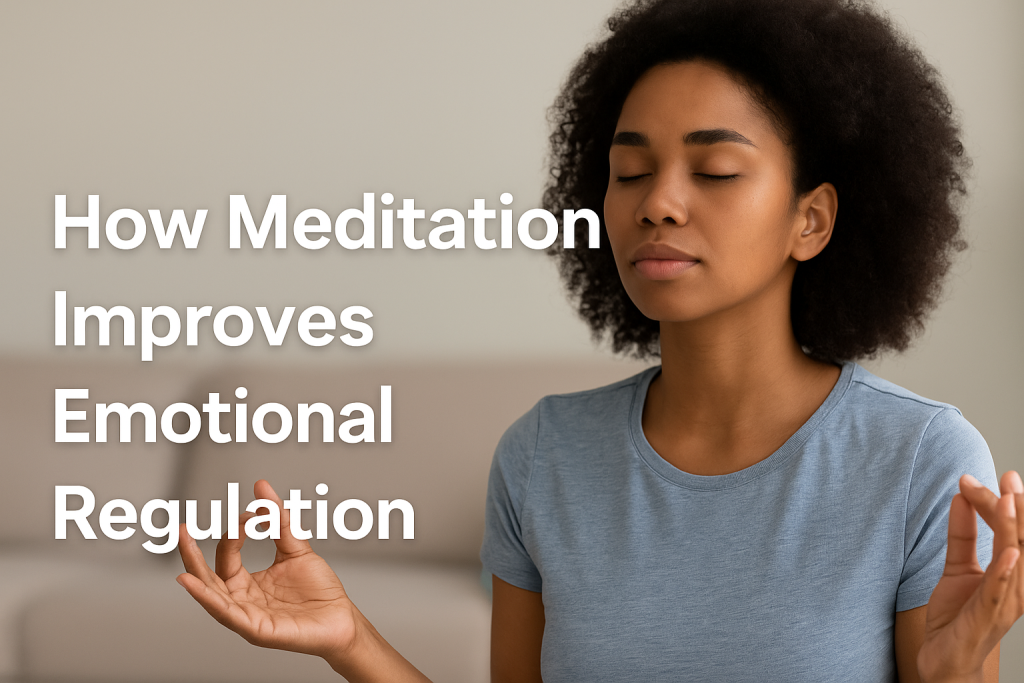
How Meditation Improves Emotional Regulation
Discover how mindfulness can help you feel calmer, clearer, and more in control
Do You Feel Hijacked by Your Emotions?
Have you ever said something in anger you didn’t mean, or felt overwhelmed by anxiety without knowing why? Maybe you’ve tried to “stay calm” but found yourself reacting before you had the chance to pause. If so, you’re not alone — and you’re not broken.
Modern life throws constant emotional triggers at us: tight deadlines, relationship tension, digital overload. But there is a powerful, accessible tool that can help you respond with clarity instead of react in stress — meditation.
In this article, we’ll explore how meditation improves emotional regulation, backed by neuroscience and real-world experience. Whether you’re new to the practice or looking to go deeper, these insights can help you navigate emotions with more ease and self-awareness.
—
What Is Emotional Regulation?
The Skill of Managing Emotions
Emotional regulation is the ability to recognize, understand, and manage your emotions — especially under pressure. It doesn’t mean suppressing or avoiding how you feel, but rather learning how to pause, process, and choose your response.
Why It Matters
Poor emotional regulation can lead to anxiety, mood swings, impulsivity, or burnout. But when we’re able to regulate our emotions, we become more resilient, calm, and grounded — even in difficult situations.
—
How Meditation Builds Emotional Awareness
1. It Helps You Recognize Emotions Early
Meditation increases your ability to notice what you’re feeling as it’s happening — not after the outburst or breakdown. You become more aware of the subtle signals in your body and mind, like a tightening chest or racing thoughts.
This awareness creates a gap — and in that gap lies your power to choose a wiser response.
2. It Trains Non-Reactivity
In meditation, you practice observing thoughts and sensations without immediately reacting to them. Over time, this rewires your brain to be less reactive and more present. You don’t suppress emotions — you just stop letting them control you.
3. It Shifts Brain Function
Studies show that regular meditation decreases activity in the amygdala (the brain’s fear and stress center) and strengthens the prefrontal cortex, which is responsible for decision-making and emotional regulation. This physical shift supports long-term emotional balance.
—
Real-Life Emotional Benefits of Meditation
More Calm, Less Stress
By pausing to meditate, even briefly, your nervous system starts to reset. This activates the parasympathetic (rest-and-digest) response and reduces cortisol levels, helping you feel calmer in moments that once triggered you.
Stronger Relationships
When you’re less reactive and more self-aware, communication improves. You’re able to listen deeply, express yourself clearly, and resolve conflict with more compassion — all essential for healthy relationships.
Greater Self-Compassion
Meditation helps you observe your inner critic without believing everything it says. With consistent practice, you build a kinder inner dialogue, which softens emotional extremes like shame and guilt.
—
How to Start Using Meditation for Emotional Regulation
1. Begin with 5–10 Minutes Daily
Start small. Sit quietly, focus on your breath, and gently notice what arises. If emotions surface, meet them with curiosity rather than judgment.
2. Use Guided Meditations
Apps like Insight Timer, Headspace, or YouTube offer emotional-focused meditations — such as “meditation for anger” or “letting go of anxiety.” These can help you build structure and support.
3. Practice in the Moment
You don’t need a cushion or silence. Pause before reacting in a stressful moment, take three conscious breaths, and ask: “What am I feeling? What do I need?” This tiny habit can shift your emotional experience over time.
—
Conclusion: Regulating Emotions Starts with Awareness
You don’t need to eliminate emotions — they’re part of being human. But with meditation, you can build a healthier relationship with them. You learn to witness rather than be swept away, respond rather than react.
Meditation doesn’t erase emotions — it helps you navigate them with grace.
✨ Want to build more emotional resilience? Subscribe for weekly mindfulness tips, guided meditations, and real-life tools to support your mental and emotional well-being.